

Importing a Mercedes-AMG from Germany: Which Model, What Penalty Tax (2026)
V8, hybrid, A45: depending on the model and the year, importing a Mercedes-AMG from Germany can be a fantastic deal or a tax trap. The complete guide to the AMG penalty tax (malus), the sweet spots, and the pitfalls to avoid in 2026.


Importing a Mercedes-AMG from Germany can save you a fortune — or cost you one in penalty tax. On this range more than any other, the devil is in the tax details. Here's the guide that separates the genuine deals from the traps.
The insight that changes everything: engine size isn't the trap
Let's start by demolishing the myth. The common belief is that a "reasonable" AMG (the 4-cylinder A45) escapes the hefty penalty tax reserved for V8s. It doesn't.
In 2026, the penalty tax cap — 80,000 EUR — is reached at just 192 g of CO2/km. And every combustion-engine AMG exceeds this threshold: the V8s (250 to 360 g), but also the A45, which emits around 205 g despite its 4 cylinders. Bought new in 2026, an A45 therefore pays as much penalty tax as a V8: the cap.
The real levers for paying a reasonable penalty tax on an imported AMG aren't engine size, but:
- The year of first registration (lever #1).
- The age-based discount.
- A low-CO2 powertrain (the recent hybrids).
The AMG penalty tax: model year + powertrain
Why the year matters so much
The penalty tax on an imported used car is calculated using the scale from the year of first registration — not the 2026 scale. And this cap has exploded in recent years:
| Year of first registration | Penalty tax cap (approximate) |
|---|---|
| 2019 | ~10,500 EUR |
| 2020 | ~20,000 EUR |
| 2021 | ~30,000 EUR |
| 2022 | ~40,000 EUR |
| 2023 | ~50,000 EUR |
| 2024 | ~60,000 EUR |
| 2025 | ~70,000 EUR |
| 2026 | 80,000 EUR |
Since every AMG V8 exceeds the cap threshold, its penalty tax before the discount matches the cap for its year. A V8 registered in 2019-2020 therefore starts from a cap that's 4 to 8 times lower than a recent model. This is the single most decisive factor of all.
The discount: slower than you'd think
An age-based discount applies to this cap. Beware the myth: since March 2025, it's no longer "-10% per year, exempt after 10 years." It's a discount calculated in monthly increments, and it's slow: a 5-year-old car still carries ~60% of the theoretical penalty tax. Full exemption only arrives at 181 months (15 years and 1 month) — and any vehicle registered before 2015 is automatically exempt.
These figures are approximate: the actual penalty tax depends on the exact CO2 figure on the papers and the month of import. The only reliable number comes from the official simulator. The full mechanism is covered in our guide to the 2026 penalty tax on an imported car.
The game-changer: the hybrid C63
The new C63 S E Performance (W206) is no longer a V8: it's a 2.0-liter turbo hybrid with 680 hp, at around 156 g of CO2. On the 2026 scale, that works out to roughly 6,000 to 7,000 EUR in penalty tax — nowhere near the 80,000 EUR of a new V8. (Note: it's a heavy PHEV with limited electric range, so a weight-based penalty may also apply — run the simulation.) In short: the only fiscally reasonable recent C63 is the hybrid.
Which AMGs to import, which to avoid
| Profile | Verdict | Why |
|---|---|---|
| Older V8s (C63 W205, E63, AMG GT) registered 2018-2020 | Sweet spot | Low cap for the year + strong discount → manageable penalty tax |
| Hybrid C63 S E Performance | Sweet spot | ~156 g → penalty tax of a few thousand EUR, not the cap |
| GLE 53/63 plug-in hybrid | Good if available | Very low CO2; check the weight-based penalty |
| Recent A45/CLA 45 | Caution | Penalty tax almost identical to a V8 (>192 g): the "small engine" offers no protection |
| Any recent V8 (2022+) | Trap | Cap of 40-80k, weak discount → the penalty tax wipes out the price gap |
| G63 | Worst case | Max CO2 + weight (~2.5 t) + high price in Germany (narrow gap) + often recent |
The takeaway: on an AMG, don't look at the power, look at the year and the powertrain. A well-chosen 2019 V8 can be a superb deal; a 2023 A45 or a recent G63, a tax black hole.
The price gap and the market
On price, the Germany-to-France gap on AMGs sits in a rough range of -15 to -25% depending on the model (treat this as indicative, never guaranteed). The German market runs very deep on the AMG range — C63, E63 (sedan and wagon), A45, GLE 63 — giving access to a wide choice of configurations and colors.
Two notable exceptions: the G63 and the AMG GT, which hold their value very well in Germany — the gap there is narrower (~-10%), which, combined with the penalty tax, makes importing them much less of a no-brainer. For the price gaps by model, see our 2026 Germany price scale, and for a comparable V8 case, our guide to importing an Audi RS6.
Reliability by engine family
M177/M178 4.0 twin-turbo V8 (C63, E63, GLE63, G63, AMG GT) — robust reputation, but worth watching as age and mileage climb: oil consumption, leaks (gaskets, oil cooler), timing chain stretch at high mileage, and costly "hot-V" turbos if they fail. Favor a car with up-to-date Mercedes servicing and no tuning.
2.0 M139 (A45, CLA 45) — the most powerful production 4-cylinder in the world, reliable for its output if well maintained. The weak point is the 8-speed dual-clutch gearbox (jerky when cold, limited thermal margin under high torque): test it cold, and absolutely avoid tuned examples that overload it.
AMG-specific buying advice
- Run the penalty tax simulation BEFORE signing — on the official simulator, using the exact CO2 figure from the papers and the date of first registration. This is rule #1: on an AMG, the penalty tax can exceed the price gap.
- Choose the model year based on the cap — for a V8, target 2018-2020 rather than 2022+. Or the recent hybrid.
- Check how it's been used — many AMGs see track use: check discs, pads, tires, and suspension.
- Full Mercedes service history + a COC (Certificate of Conformity) with the CO2 value (essential for registration).
- Odometer fraud — cross-check the mileage against the service history and successive TÜV inspections (see our scam-prevention advice).
- Avoid tuned or modified examples (reliability + compliance).
The import process in practice
Once the right AMG is identified and its penalty tax simulated, the rest follows the standard process: German documents, tax clearance, certificate of conformity, registration. It's all detailed in our complete guide to importing from Germany.
In summary
- Engine size isn't the lever: bought new in 2026, even the 4-cylinder A45 hits the penalty tax cap, just like a V8.
- The real levers: the year of first registration (a much lower cap before 2021) and the powertrain (the hybrid changes everything).
- Sweet spots: older 2018-2020 V8s, the hybrid C63, the hybrid GLE.
- Pitfalls: the G63, recent V8s (2022+), and the recent A45 (V8-level penalty tax).
- Reliability: the M177 V8 is robust but worth monitoring; the A45's 8-speed DCT gearbox needs watching.
Torn between several AMGs? Write to us: we'll tell you within 24 hours which one is a genuine deal to import — penalty tax included — and which one is a trap.
Frequently asked questions
- Which Mercedes-AMG is the most worthwhile to import from Germany?
- Three profiles stand out in terms of price-gap-to-penalty-tax ratio: older V8s (C63 W205, E63, AMG GT registered 2018-2020), which start from a much lower penalty tax cap and benefit from a strong age-based discount; the new hybrid C63 S E Performance (~156 g of CO2), whose penalty tax is nowhere near a V8's; and the plug-in hybrid GLE 53/63. Conversely, the G63 and any recent V8 (2022+) are the pitfalls to avoid.
- Does a 4-cylinder AMG (A45) have a small penalty tax?
- No, that's the myth to bust. In 2026, the penalty tax cap (80,000 EUR) is reached at just 192 g of CO2/km — and the A45, despite its 4 cylinders, emits around 205 g. Bought new in 2026, it therefore pays as much penalty tax as a V8: the cap. Engine size isn't the lever; it's the year of first registration and the powertrain (hybrid in particular) that make the difference.
- Why is the G63 a trap when importing?
- The G63 stacks every unfavorable factor: very high CO2 (over 335 g), a weight of around 2.5 tonnes that also triggers the weight-based penalty, strong demand that keeps prices high in Germany (so a narrow gap with France), and units that are often recent. The result: a thin price gap and a penalty tax close to the maximum. It's the worst combination in the range.
- How is the penalty tax calculated on an imported AMG?
- On the scale of the year of first registration abroad (not the 2026 scale), to which an age-based discount is then applied. This cap has exploded in recent years: around 10,500 EUR in 2019 versus 80,000 EUR in 2026. A V8 registered in 2019-2020 therefore starts from a cap that's 4 to 8 times lower than a recent model. The exact amount depends on the CO2 figure on the registration papers and the year: it must be run through the official simulator.
- Does the age-based discount quickly wipe out the penalty tax on an AMG?
- No, more slowly than people think. Since March 2025, the discount is calculated in monthly increments: a 5-year-old car still carries around 60% of the theoretical penalty tax, and full exemption only arrives at 181 months (15 years and 1 month). The only simple rule of thumb: any vehicle registered before January 1, 2015 is automatically exempt.

Importer of premium vehicles from Europe to France and Switzerland. Specialist in sourcing, negotiation and administrative formalities.
Contact Maxime
2026 Penalty Tax on a Car Imported from Germany: What Actually Applies
CO2 penalty tax, weight tax, the so-called 'retroactive penalty tax': separating fact from fiction for 2026. How the penalty tax is really calculated on an imported used car — and the two misconceptions that cost buyers dearly.

The Best Cars to Import from Germany in 2026 (Ranked)
Which premium models are genuinely worth importing from Germany in 2026? Our logic-driven ranking — the no-brainers, the hard-to-find configurations, the anti-penalty-tax weapon, and the traps to avoid at all costs.
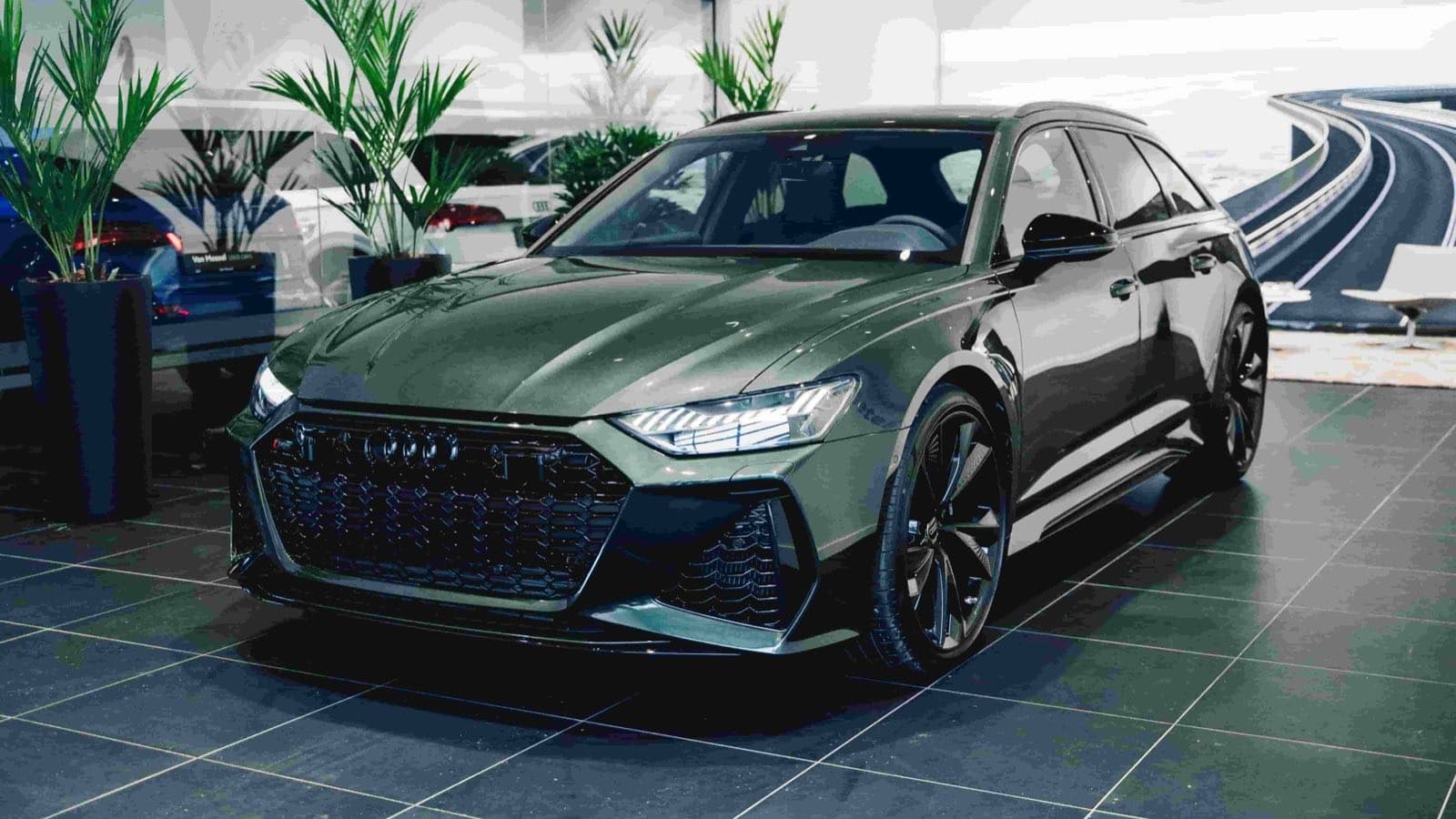
Importing an Audi RS6 from Germany: The Real Penalty Tax (Malus) Calculation (2026 Guide)
The real price gap, a deep market, and above all the penalty tax calculation that makes or breaks the deal: the complete guide to importing an Audi RS6 from Germany in 2026 without falling into the tax trap.