

Why Are Cars Cheaper in Germany? (2026)
4.7 times more new premium cars, two thirds of them company cars, no purchase tax: the real reasons behind German prices, backed by 2025 figures, the myths to forget, and the cases where the gap disappears once you import.

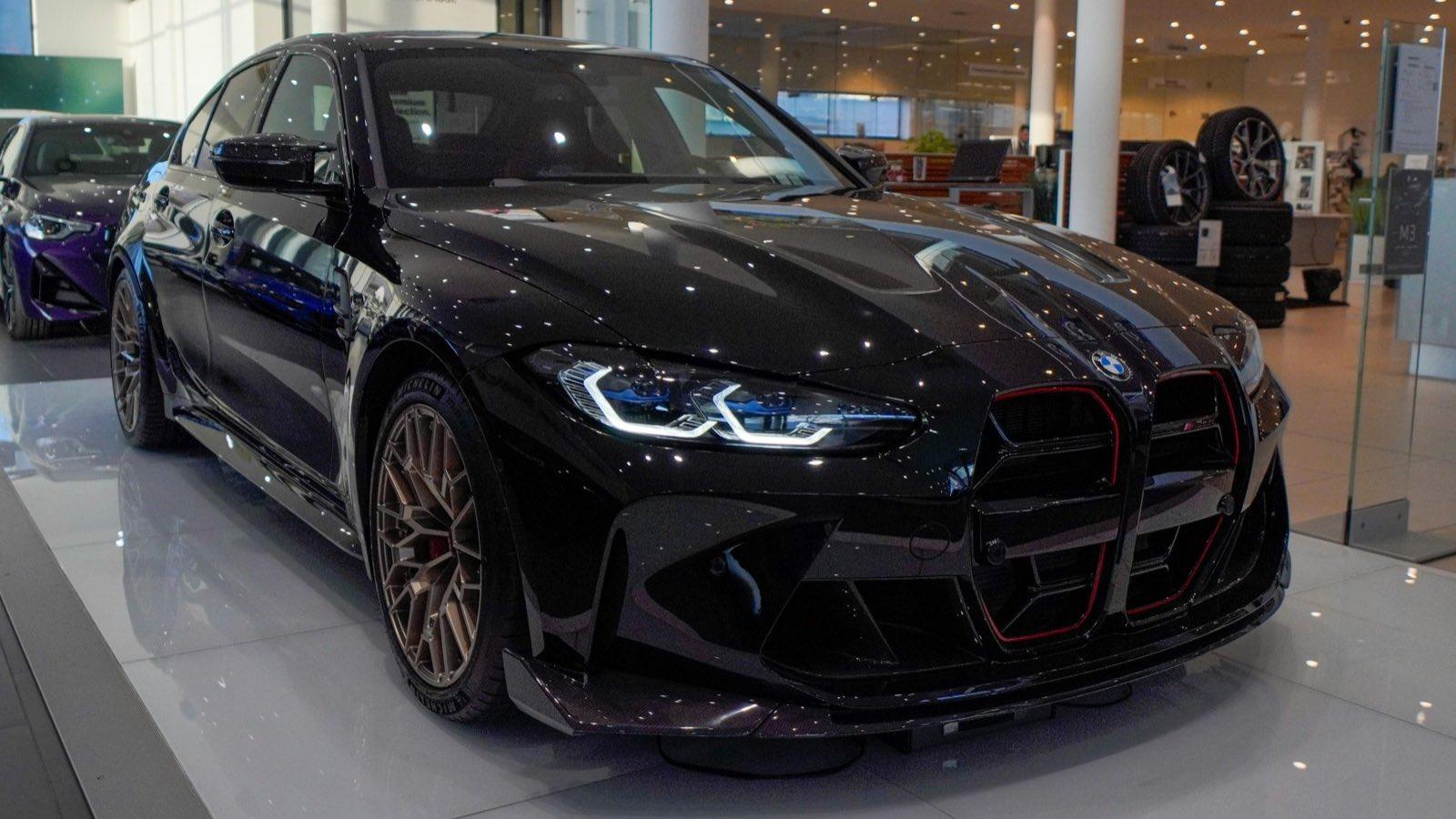
"Why is the same car cheaper on the other side of the Rhine?" The question comes up in almost every first conversation we have. The answer isn't a trick, it's the structure of the German market: more premium cars sold new, many company cars and no purchase tax. Here are the figures, the myths to forget, and the case where the gap disappears once you import.
The short answer
- More new premium cars. In 2025, Germany registered 4.7 times more new BMW, Mercedes, Audi and Porsche cars than France. They are tomorrow's used cars.
- Company cars. Two out of three new cars there are registered to a company, then sold on a few years later.
- No purchase tax. No penalty tax in Germany, against a French penalty tax of up to €80,000 in 2026.
- What barely matters: VAT (19% against 20%) and the size of the used market, which is comparable per inhabitant.
Reason 1: Germany buys 4.7 times more new premium cars
This is the main cause. A German used premium car was first a new car sold in Germany, and that market has no equivalent in France.
| New cars in 2025 | Germany | France |
|---|---|---|
| Whole market | 2,857,591 | 1,632,154 |
| BMW + Mercedes + Audi + Porsche | around 750,000 | around 159,000 |
| Share of these four brands | 26% | nearly 10% |
Sources: KBA (German Federal Motor Transport Authority) for Germany, PFA and AAA Data for France.
Per inhabitant, that's around 9 new premium cars per 1,000 inhabitants in Germany, against 2.3 in France. A few years later, these cars reach the used market. More cars also means more versions, engines and configurations to compare to find the right one.
Listings reflect it: mobile.de, Germany's leading site, shows around 1.4 million cars online on its own. Across all French sites, the aggregator Leparking counted around 940,000 in October 2025. Our guide to buying on mobile.de explains how to sort through this supply without getting caught out.
Reason 2: two out of three new cars are company cars
In 2025, 66% of new cars registered in Germany were registered to a company, and only 34% to a private individual. In France, private buyers account for around 46% of the new car market.
These company cars follow a short cycle:
- Company cars and leasing. Contracts often last two to four years. According to the leasing company Ayvens, cars returning from leasing are on average 3 years old with 30,000 to 90,000 km.
- "Tactical" registrations. According to the research firm Dataforce, more than a third of German registrations in 2025 were made by manufacturers, dealers or rental companies. These cars very quickly become recent used cars with low mileage.
- Tax rules that favour electric cars. A German employee declares the private use of a company car at 1% of the list price per month, and only 0.25% for an electric car up to €100,000. Electric company cars therefore feed the used market heavily.
The result: a steady flow of 2- to 4-year-old, well-maintained cars reaching the market at the same time. This abundance pushes prices down.
Be careful with very recent cars: a car under 6 months old or with under 6,000 km is considered new by the French tax authorities, and 20% French VAT is then due. It's all explained in our guide to the quitus fiscal.
Reason 3: no purchase tax in Germany
Germany doesn't tax the purchase of a car. It levies an annual tax, the Kfz-Steuer, based on engine size and CO2 emissions. For a 3-litre petrol car emitting 230 g of CO2, it comes to around €460 a year.
In France, the same new car would pay the maximum penalty tax of €80,000 in 2026: it applies from 192 g of CO2, and a weight-based penalty is added from 1,500 kg, with the total capped at €80,000. The NGO Transport & Environment compared the taxation of a large company SUV over four years: €142,912 in taxes in France, against a net tax advantage of €7,072 in Germany.
No study measures the exact effect of the penalty tax on used car prices. But the logic is simple: in Germany, a powerful version isn't penalised at purchase, so it sells more as a new car, and then turns up more easily on the used market.
What explains almost nothing
- VAT. 19% in Germany, 20% in France: a single point of difference.
- "The German used car market is twice as big." False. In 2025, Germany recorded around 6.5 million used car sales, France around 5.4 million. Per inhabitant, it's about the same: roughly 78 used car sales per 1,000 inhabitants in both countries. The difference lies in what is sold, not in the number of sales.
- "German cars are better equipped." No statistics prove it. The volume offers more different configurations, which helps you find the right one, but a German car isn't better equipped by default.
- "Cars are 15 to 30% cheaper in Germany." No public study measures the average gap for identical cars: the European Commission's last car price report dates from 2011. The gaps we observe, model by model, are in our 2026 price guide.
The trap: part of the gap is the penalty tax
A French used car's price reflects the penalty tax already paid by its first owner. A German used car's doesn't: there never was one. When you import, you pay the French penalty tax, based on the year of first registration, with a reduction depending on the car's age.
| Type of car | What remains of the gap after import |
|---|---|
| Electric | Almost all of it: no CO2 or weight-based penalty tax |
| Plug-in hybrid from 2022 to 2024 (over 50 km of electric range in town) | Almost all of it: no weight-based penalty, and a low or zero CO2 penalty |
| Recent powerful petrol car | Often nothing: the penalty tax can exceed the price gap |
| Car under €40,000 | Little: import costs weigh heavily |
The calculation is detailed in our guide to the penalty tax on an imported car, and worked examples by budget in buy in France or import.
How to measure the gap for your car
- Pick a specific car: model, engine, year, mileage, main options.
- Compare it on both sides: on mobile.de in Germany, on listing sites in France, with the same configuration.
- Add the import costs: transport, certificate of conformity, registration, roadworthiness test and, if you delegate, the fees. Our guide to what an import really costs details them.
- Add the penalty tax, calculated on the year of first registration.
- Compare the total with the French price. If the gap remains clearly positive, importing is worth it.
In summary
- Cause 1: Germany registers 4.7 times more new premium cars than France.
- Cause 2: two out of three new cars are company cars, sold on after 2 to 4 years.
- Cause 3: no purchase tax in Germany, against a penalty tax of up to €80,000 in France.
- Not a cause: VAT (one point of difference) or the size of the used market, comparable per inhabitant.
- The trap: when you import, you pay the penalty tax. The gap holds on a recent electric car or plug-in hybrid, much less on a powerful petrol car.
Frequently asked questions
- Why are used premium cars cheaper in Germany?
- Because supply is much larger. In 2025, Germany registered around 750,000 new BMW, Mercedes, Audi and Porsche cars, against around 159,000 in France: 4.7 times more. Two out of three new cars there are bought by companies and return to the used market a few years later. Finally, Germany has no purchase tax, so powerful versions aren't penalised.
- Are cars really 15 to 30% cheaper in Germany?
- No public study measures the average gap for identical cars between France and Germany: the European Commission's last car price report dates from 2011. The percentages going around online aren't sourced. The gap depends on the model, the year and the options: it is measured by comparing the same car on both sides of the border.
- Is the used car market bigger in Germany?
- In volume, yes: around 6.5 million used car sales in 2025, against around 5.4 million in France. But per inhabitant it's about the same, roughly 78 used car sales per 1,000 inhabitants in both countries. The real difference is upstream: Germany buys far more new premium cars, which then feed its used market.
- Why is there no penalty tax in Germany?
- Germany doesn't tax the purchase of a car. It levies an annual tax, the Kfz-Steuer, based on engine size and CO2: around €460 a year for a 3-litre petrol car emitting 230 g of CO2. In France, the same new car would pay the maximum penalty tax of €80,000 in 2026.
- Is a car that's cheaper in Germany always a good deal?
- No. When you import, you pay the French penalty tax, based on the year of first registration with an age-based reduction, whereas the penalty tax on a French used car was already paid by its first owner. Import costs come on top, and they weigh heavily on an inexpensive car. A recent electric car or plug-in hybrid keeps almost all of the gap; a recent powerful petrol car can lose it entirely.

Importer of premium vehicles from Europe to France and Switzerland. Specialist in sourcing, negotiation and administrative formalities.
Contact Maxime
Germany Car Import Price Guide 2026: Full Cost Breakdown by Model and Brand
How much does a BMW, Porsche, Audi or Mercedes really cost in Germany vs. France? A detailed price guide with real price gaps for 25 popular models in 2026.
Buy in France or Import from Germany? The Verdict by Budget (2026)
€40,000, €70,000 or €120,000: should you buy your car in France or import it from Germany? Five worked examples, price gap, costs and French penalty tax included, and the three-question rule to settle your case.
2026 Penalty Tax on a Car Imported from Germany: What Actually Applies
CO2 penalty tax, weight tax, the so-called 'retroactive penalty tax': separating fact from fiction for 2026. How the penalty tax is really calculated on an imported used car — and the two misconceptions that cost buyers dearly.