

Buy in France or Import from Germany? The Verdict by Budget (2026)
€40,000, €70,000 or €120,000: should you buy your car in France or import it from Germany? Five worked examples, price gap, costs and French penalty tax included, and the three-question rule to settle your case.

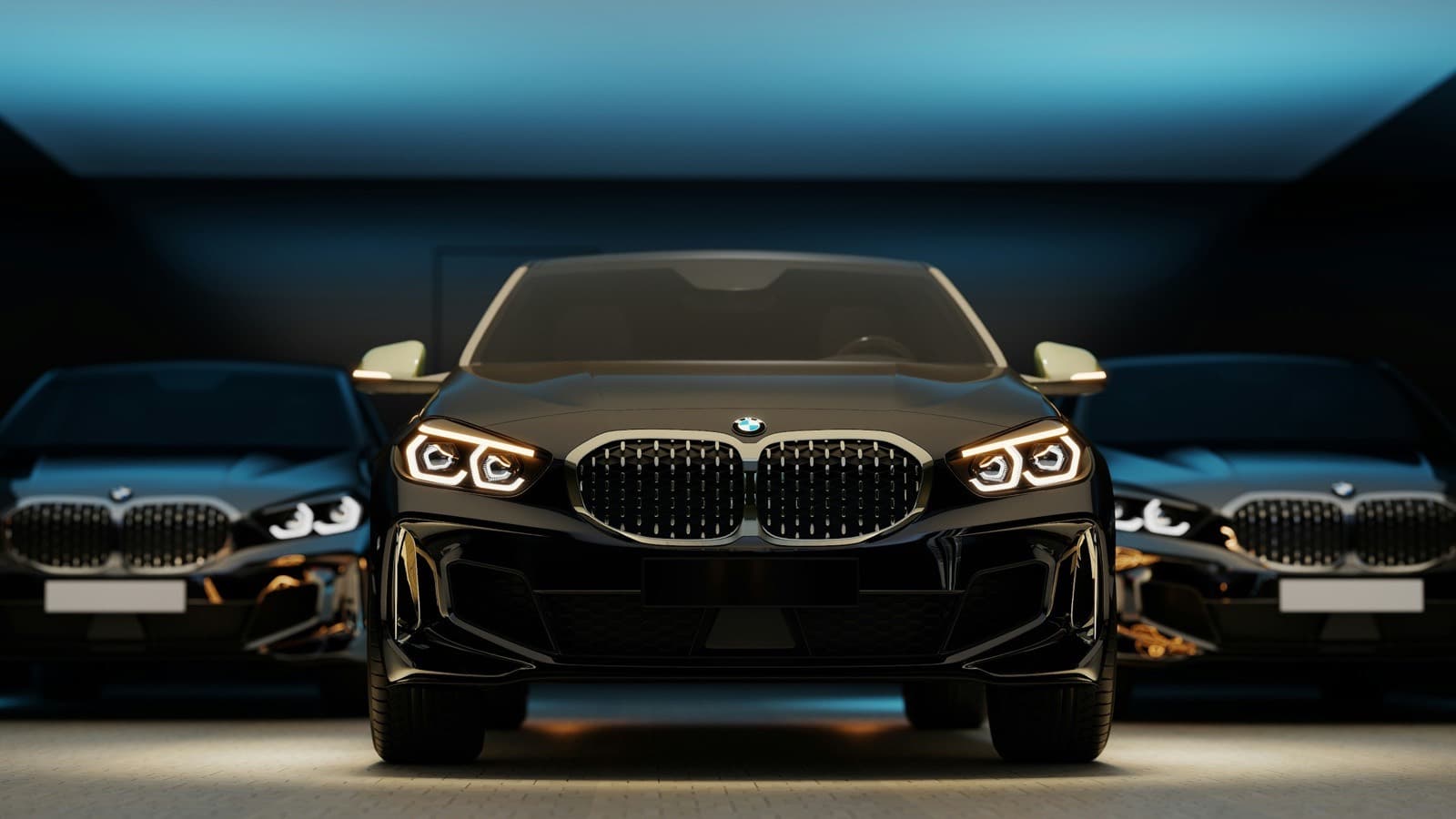
"I have this budget: do I buy in France or import from Germany?" It's the question we're asked most. The honest answer often surprises people: it isn't your budget that decides, it's the car's powertrain and year. Here are five worked examples, and the rule to settle your case.
The short answer
- Under €40,000: rarely worth it. Import costs eat most of the gap.
- From €40,000 to €80,000: yes for a 2022-2024 plug-in hybrid or an electric car; no for a recent combustion sports car.
- Above €80,000: very worthwhile for electric or hybrid; a recent combustion car can, on the contrary, cost more than in France.
The three figures that decide
- The price gap with France: around 15 to 20% on a recent premium used car, according to our 2026 price guide.
- Import costs: €3,500 to €7,500 in total (transport, certificate of conformity, registration, inspection and, if you delegate, broker fees). The details are in our guide to what an import really costs.
- The French penalty tax: it makes or breaks the deal. In France, a used car's penalty tax has already been paid by its first owner. When you import, you pay it, based on the scale of the year of first registration and with an age-based reduction.
Five worked examples
| Budget | Car | Gap with France | Import costs | Penalty tax on import | Result |
|---|---|---|---|---|---|
| ≈ €40,000 | BMW 320d M Sport 2023 | ≈ €6,500 | €3,500 to €7,500 | ≈ €0 to €300 | ≈ −€1,300 to +€3,000 |
| ≈ €70,000 | BMW X5 xDrive45e 2022 (plug-in hybrid) | ≈ €11,000 | €3,500 to €7,500 | €0 | ≈ +€3,500 to +€7,500 |
| ≈ €70,000 | BMW M3 Competition 2022 | ≈ €13,000 | €3,500 to €7,500 | ≈ €24,800 to €26,800 | ≈ −€15,300 to −€21,300 |
| ≈ €120,000 | Porsche Taycan Turbo 2022 (electric) | ≈ €25,000 | €3,500 to €7,500 | €0 | ≈ +€17,500 to +€21,500 |
| ≈ €140,000 | Porsche 911 Carrera S 2022 | ≈ €26,000 | €3,500 to €7,500 | ≈ €24,800 to €26,800 | ≈ −€2,300 to −€8,300 |
Prices come from our 2026 price guide, for comparable cars on both sides of the border. The penalty tax follows the scale of the year of first registration, with the reduction applicable to a car imported at the end of 2026. These are orders of magnitude: the exact figure depends on the specific car.
How to read these penalty tax figures:
- The 320d emits, depending on the version, around 120 to 135 g of CO2: the 2023 scale starts at 123 g and is €310 at 135 g, before reduction. Its mass stays below the 2023 weight tax threshold (1,800 kg).
- The X5 xDrive45e is a plug-in hybrid with a city electric range of 87 to 99 km: first registered in 2022, it's fully exempt.
- The M3 (around 227 g) and the 911 Carrera S (around 230 to 240 g) exceed 224 g: they hit the 2022 cap of €40,000, brought down to €24,800 to €26,800 by a 33 to 38% reduction depending on the month of registration.
- The Taycan is electric: no penalty tax.
The verdict, budget by budget
Under €40,000: rarely worth it
On a recent premium saloon, the gap with Germany is around €6,000 to €7,000. Once import costs are paid, a few thousand euros remain at best, sometimes nothing. Importing mainly makes sense for a configuration you can't find in France (colour, options, trim) or for an electric car.
From €40,000 to €80,000: it all comes down to the powertrain
This is the bracket where the gap becomes interesting, and where the penalty tax makes all the difference:
- a plug-in hybrid first registered between 2022 and 2024, or an electric car, is imported with no penalty tax: most of the gap stays in your pocket;
- a recent combustion sports car loses everything: its penalty tax exceeds the price gap.
The list of SUVs that qualify with no penalty tax is in our article on which premium SUVs to import with no penalty tax.
Above €80,000: the biggest gains, and the biggest traps
The gap runs into tens of thousands of euros. An electric car like a Porsche Taycan can save €17,000 to €21,000. But a recent combustion car at the penalty tax cap, like a 2022 911, on the contrary costs more imported than bought in France.
For a combustion sports car, aim instead for an older model year: the penalty tax cap was about €10,500 in 2019, versus €40,000 in 2022, and the age-based reduction is larger. It's then calculated case by case.
The rule in three questions
- Which powertrain? Electric or plug-in hybrid: favourable. Powerful combustion engine: the penalty tax will weigh heavily.
- Which year of first registration? It sets the penalty tax scale and its reduction.
- Does the gap exceed costs + penalty tax? If clearly yes, import. If not, buy in France.
How Auto M Import settles your case
Before any search, we calculate the real total cost of importing your project: German price, costs, the exact penalty tax based on the year of first registration. We compare it with the French price, and we tell you frankly whether importing is worth it, or not.
In summary
- It isn't the budget that decides, it's the powertrain and the year of the car.
- Under €40,000: rarely worth it, except for a configuration you can't find.
- 2022-2024 plug-in hybrid or electric car: importing saves thousands to tens of thousands of euros.
- Recent combustion sports car: the penalty tax often exceeds the gap; an older model year can change everything.
- The right method: price gap minus costs minus penalty tax, calculated before buying.
Frequently asked questions
- With €40,000, is it better to buy in France or import from Germany?
- Generally, buy in France. At this price level, the gap with Germany is around 15%, i.e. €6,000 to €7,000 on a recent premium saloon, and import costs (transport, paperwork, registration, any broker fees) come to €3,500 to €7,500. At best a few thousand euros remain, sometimes nothing. Importing mainly makes sense for a configuration you can't find in France.
- Why does a recent combustion sports car cost more when imported?
- Because of the French penalty tax. In France, a used car's penalty tax was already paid by its first owner. When you import, you pay it yourself, based on the scale of the year of first registration and with an age-based reduction. A 2022 BMW M3 or Porsche 911 exceeds 224 g of CO2: it hits the 2022 cap of €40,000, about €25,000 after reduction, more than the price gap.
- Which cars are the most profitable to import?
- Electric cars, with no penalty tax whatever their year, and plug-in hybrids first registered between 2022 and 2024 with a city electric range above 50 km, fully exempt from the weight tax. On a €70,000 or €120,000 model, the 15 to 20% price gap then stays almost entirely in your pocket.
- Can a combustion sports car still be worth importing?
- Yes, if it's older. The penalty tax cap depends on the year of first registration: it was about €10,500 in 2019, versus €40,000 in 2022 and €80,000 in 2026, and the age-based reduction increases with age. A 2019 or 2020 sports car can therefore become worthwhile again. It's calculated case by case.
- How do you know whether importing is worth it for a specific car?
- Add up three things and compare them with the price gap with France: the import costs, the penalty tax calculated on the year of first registration with its reduction, and any broker fees. If the gap stays clearly positive, importing is worth it. Auto M Import's simulator does this calculation in seconds.

Importer of premium vehicles from Europe to France and Switzerland. Specialist in sourcing, negotiation and administrative formalities.
Contact Maxime
Germany Car Import Price Guide 2026: Full Cost Breakdown by Model and Brand
How much does a BMW, Porsche, Audi or Mercedes really cost in Germany vs. France? A detailed price guide with real price gaps for 25 popular models in 2026.
2026 Penalty Tax on a Car Imported from Germany: What Actually Applies
CO2 penalty tax, weight tax, the so-called 'retroactive penalty tax': separating fact from fiction for 2026. How the penalty tax is really calculated on an imported used car — and the two misconceptions that cost buyers dearly.
Which Premium SUVs Can You Import Without the French Penalty Tax in 2026? The Verified List
A 2.5-tonne premium SUV imported from Germany can cost tens of thousands of euros in French penalty tax… or nothing. Electric and 2022-2024 plug-in hybrids: the model-by-model list of those that qualify, those that fail, and the exact rule to check.