

Importing a BMW M3 or M4 from Germany: Price, Penalty Tax, Pitfalls (2026 Guide)
The real price gap, hard-to-find configurations, and above all the actual penalty tax calculation on an M3/M4: the complete guide to importing a BMW M car from Germany in 2026 without any bad surprises.

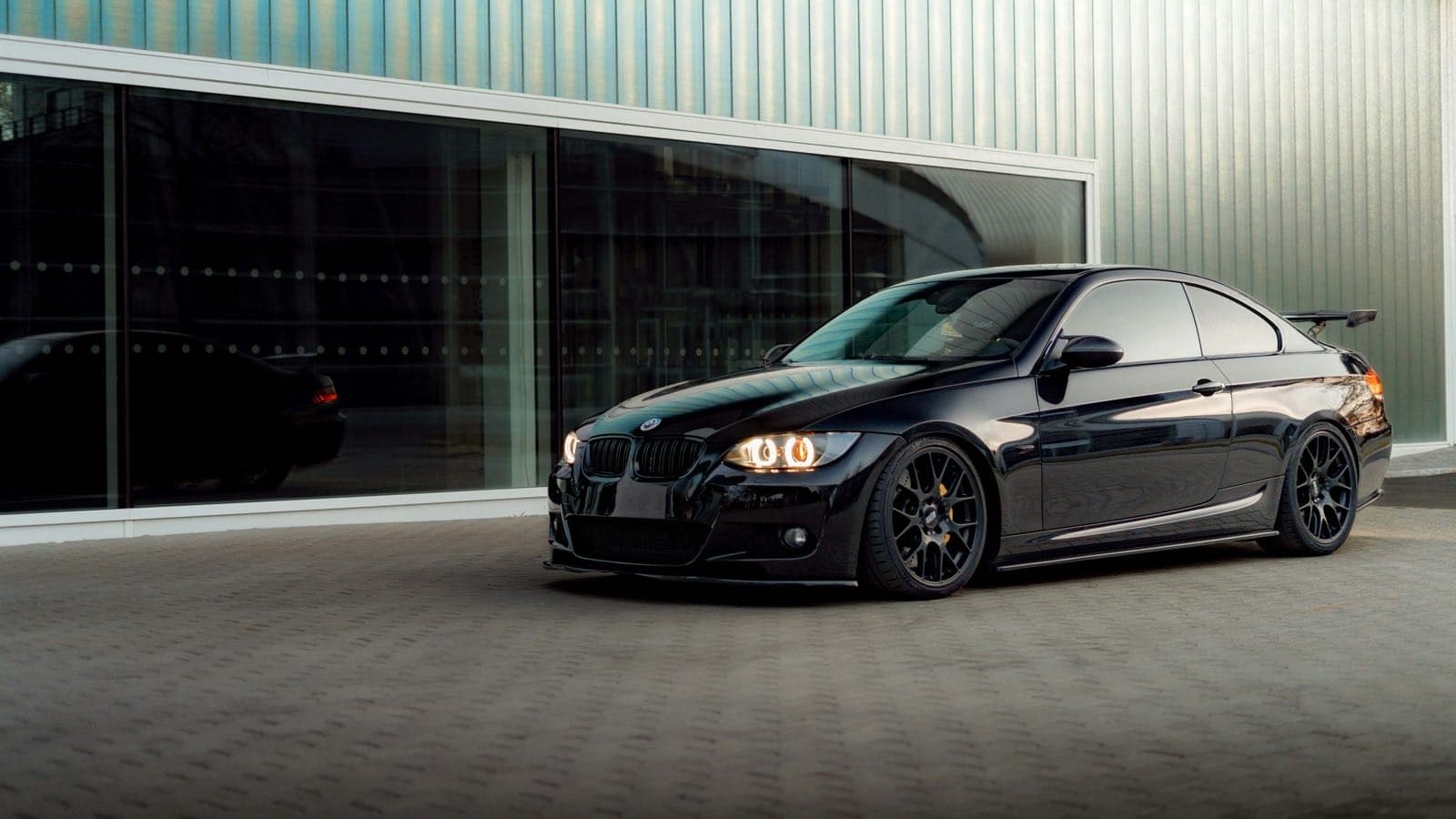
The BMW M3 (and its coupe version, the M4) is one of the most imported cars from Germany — for good reason: a deep market, configurations you can't find in France, and a genuine price gap. But it's also a model where the 2026 penalty tax changes the whole calculation. Here is the complete guide, without marketing exaggeration.
Why import an M3/M4 from Germany (the real argument)
The strongest argument isn't price — it's choice. The German market is the deepest in Europe: at any given time, you'll find several hundred M3 Competition models and nearly a thousand M4s listed, against a much thinner stock in France.
Specifically, that means access to:
- The M3 Touring (G81 estate), built in limited volumes and far more available in Germany than in France, where it sells within days.
- BMW Individual configurations and Frozen paint finishes (Deep Green, Pure Grey…), rare on the French market.
- M Carbon packages (exterior, carbon bucket seats, carbon roof) and M Carbon ceramic brakes — often the real reason behind an import.
- All the Competition, xDrive, rear-wheel-drive, manual variants side by side.
For the bigger picture on the most worthwhile models to import, see our ranking of the best cars to import from Germany.
The price gap, without exaggeration
You sometimes read "M3 −30% in Germany." That's a marketing maximum. The more honest reality: a gap of around 15 to 25% on the listed price of a recent M3/M4 Competition, often 10,000 to 20,000 EUR before import fees and the penalty tax.
Two important nuances:
- The gap is narrower on M models than on a diesel 3 Series: M cars are already highly sought-after in Germany, so the arbitrage is less pronounced.
- Part of this gap can be clawed back by the penalty tax at French registration (see below).
The real gain is therefore never calculated on the listed price, but on the total: German price + transport + registration + penalty tax, compared to the turnkey French price. For the breakdown of gaps by model, see our Germany 2026 price scale.
The penalty tax: the real issue with an M3/M4
This is the point most sellers stay quiet about. The S58 engine (3.0-litre twin-turbo petrol) emits around 227 g of CO2/km — right at the top of the scale.
New, it hits the cap
The 2026 scale kicks in from 108 g/km and caps at 80,000 EUR around 192 g/km. At 227 g, a new M3/M4 therefore hits the 80,000 EUR cap. (The weight tax adds nothing on top: the combined total is capped at the CO2 penalty tax, which is already at its maximum.)
For an imported used car, it all depends on the model year
Good news: on an imported used car, it's not the 2026 scale that applies, but the one from the year of first registration, with an age-based discount. The older the car, the more the penalty tax shrinks.
But let's be clear: on a recent M3/M4, the penalty tax is not negligible — it runs into the tens of thousands of euros, because the scales of recent years were already very high and the S58 hits their cap. A 2022 M3 imported today is still subject to a significant penalty tax, though heavily reduced by the discount compared to a new car.
The exact amount depends on the version, the precise CO2 figure, and the year: there's only one reliable source, the official simulator, run for the specific vehicle you're targeting. The full mechanism is detailed in our guide to the 2026 penalty tax on an imported car.
Which generation and version to choose
F80/F82 (S55) or G80/G82 (S58)?
- The current G80/G82 generation (S58 engine) is known to be more reliable: it fixes the connecting rod bearing weakness of the S55, a known flaw of the previous generation. The S58 is considered one of the most robust recent M engines.
- The F80/F82 (S55) remains lighter (~270 kg less), with a classic kidney grille and the choice of DCT or manual — but it demands rigorous maintenance (oil, service intervals).
Gearbox, drivetrain, body style
- Gearbox: the F80 offers a 7-speed DCT or 6-speed manual; the G80 moves to the ZF 8-speed automatic, with the manual only available on the rear-wheel-drive version (not on the Competition xDrive).
- Drivetrain: rear-wheel drive (purer) vs xDrive (more reassuring and faster, especially in wet conditions).
- The G80 grille: a divisive topic. It's the main styling criticism of this generation — something to come to terms with depending on your taste.
What to check before buying
An M car isn't an ordinary saloon: the inspection is specific.
- Track-day use — the real risk. Look for the tell-tale signs: uneven tyre and brake wear, marked wheels, signs of heavy launch control use. An M car driven on track prematurely wears the clutch and discs.
- M Carbon ceramic brakes (optional) — excellent, but very expensive to replace. Check the condition of the discs and calipers.
- Oil cooler seepage on early G80/G82 models — should be addressed.
- Mileage — cross-check it against the service book and the BMW network history to rule out odometer fraud.
- iDrive software updates — made on 2021 production cars (screen bugs fixed).
Importing in practice
Once the right M3/M4 has been found and the penalty tax simulated, the rest follows the standard import process: gathering the German documents, tax clearance, certificate of conformity, registration. Everything is detailed in our complete guide to importing from Germany.
On a vehicle at this price point — and this penalty tax level — the smallest mistake gets expensive. This is typically a case where the support of a professional who inspects, negotiates, and calculates the real penalty tax before the purchase pays for itself many times over.
In summary
- Price gap: 15 to 25% on the listed price, but tighter than on a diesel, and to be calculated with the penalty tax included.
- The real advantage: access to rare configurations (Touring, Individual, carbon) that are hard to find in France.
- The penalty tax: high on a recent M3/M4 (tens of thousands of euros), it shrinks with age — the model year is decisive, and must be simulated.
- Reliability: advantage to the G80/G82 (S58) over the F80/F82 (S55).
- To check: track use, ceramic brakes, oil cooler, actual mileage.
Have a specific M3 or M4 in mind? Send us the listing: we'll tell you within 24 hours the real total cost, penalty tax included, and whether it's a genuine deal or a trap.
Frequently asked questions
- How much do you save by importing a BMW M3 from Germany?
- The gap on the listed price is around 15 to 25% on a recent M3/M4 Competition, often 10,000 to 20,000 EUR before fees and penalty tax. Be careful: this gap is narrower than on a diesel 3 Series, because M models are already in high demand in Germany — and part of it can be clawed back by the penalty tax at French registration. The real gain is calculated with all fees and the penalty tax included, not on the listed price.
- What is the penalty tax on an imported BMW M3 or M4 in 2026?
- The S58 engine emits around 227 g of CO2/km, which puts the M3/M4 right at the top of the scale. For a new car in 2026, it hits the 80,000 EUR cap. For an imported used car, the scale that applies is the one from the year of first registration, with an age-based discount: the penalty tax then runs into the tens of thousands of euros on a recent model, and shrinks as the car gets older. It's essential to run the simulation case by case on the official tool before buying.
- Should you import an F80 (older) or G80 (current) M3?
- The current G80/G82 generation (S58 engine) is known to be more reliable: it fixes the connecting rod bearing weakness of the S55 (F80/F82). The S58 is considered one of the most robust recent M engines. The F80 remains appealing (classic kidney grille, lighter, DCT or manual gearbox) but demands rigorous maintenance. The choice depends on budget, styling preference (the G80 grille is divisive), and intended use.
- Is the BMW M3 Touring easier to find in Germany?
- Yes, by a wide margin. The M3 Touring estate (G81), built in limited volumes, is far more available on the German market than in France, where it is rare and sells within days. This is one of the cases where importing makes the most sense: access to a body style and configurations that are nearly impossible to find on the French market.
- What pitfalls should you check before importing an M3/M4?
- The main risk is track-day use, which prematurely wears the clutch, brakes, and tyres: look for the tell-tale signs (uneven wear, marked wheels, usage history). Also check the optional carbon-ceramic brakes (very expensive to replace), oil cooler seepage on early G80 models, mileage consistency to rule out odometer fraud, and an up-to-date BMW network service record.

Importer of premium vehicles from Europe to France and Switzerland. Specialist in sourcing, negotiation and administrative formalities.
Contact Maxime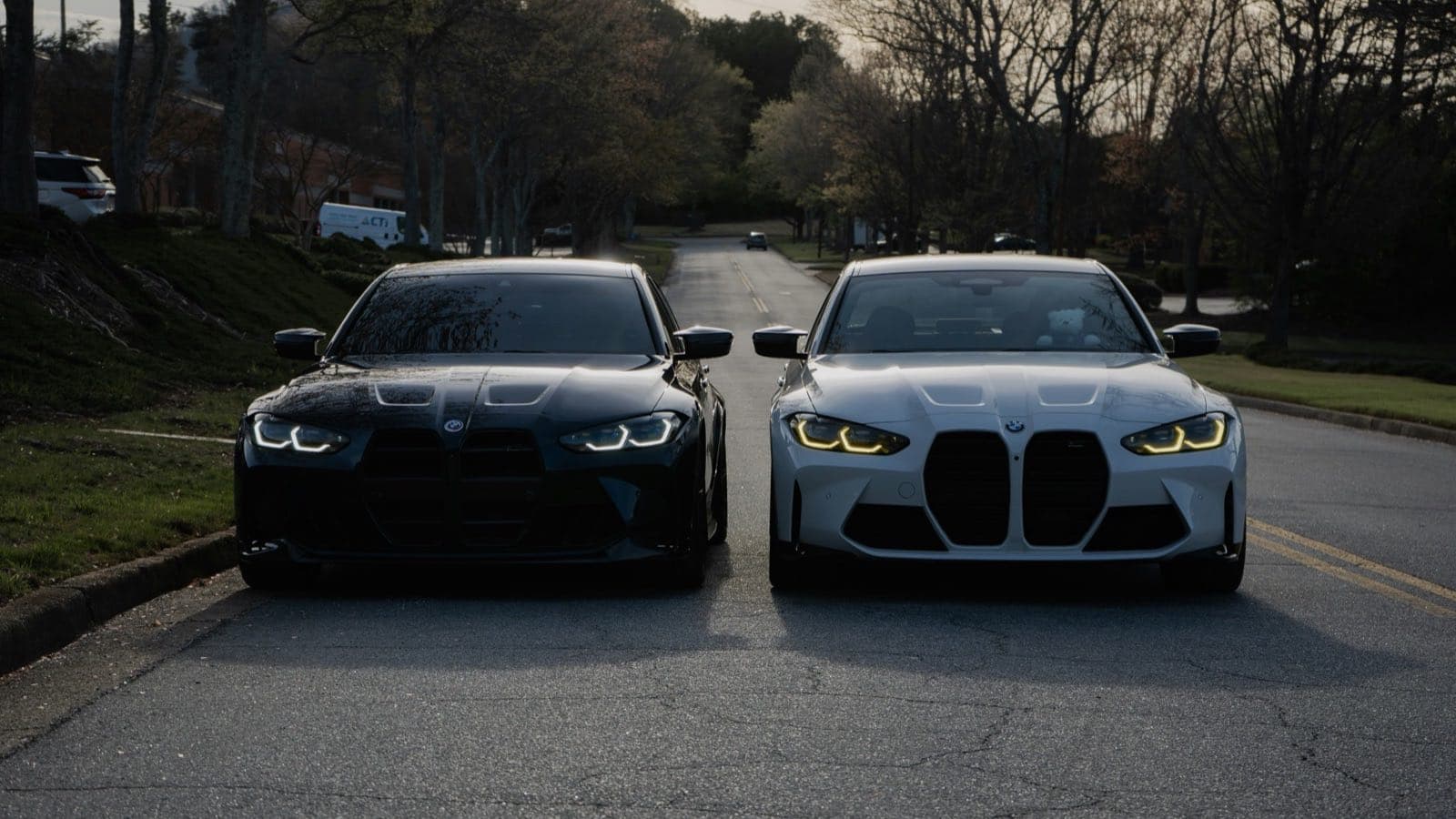
The Best Cars to Import from Germany in 2026 (Ranked)
Which premium models are genuinely worth importing from Germany in 2026? Our logic-driven ranking — the no-brainers, the hard-to-find configurations, the anti-penalty-tax weapon, and the traps to avoid at all costs.
2026 Penalty Tax on a Car Imported from Germany: What Actually Applies
CO2 penalty tax, weight tax, the so-called 'retroactive penalty tax': separating fact from fiction for 2026. How the penalty tax is really calculated on an imported used car — and the two misconceptions that cost buyers dearly.
Importing a Car from Germany to France in 2026: The Complete Guide (Price, Process, Timeline)
Everything you need to know before bringing a vehicle in from Germany: the real costs, the administrative process, realistic timelines, and the pitfalls to avoid.