

Car Imported from Germany: What Warranty Do You Get? (Manufacturer, Legal, 2026)
Does the manufacturer warranty follow the car to France? What does the German seller owe you if something breaks? Dealer or private seller, used or nearly new: what really protects you when you import, and the traps that make you lose those rights.

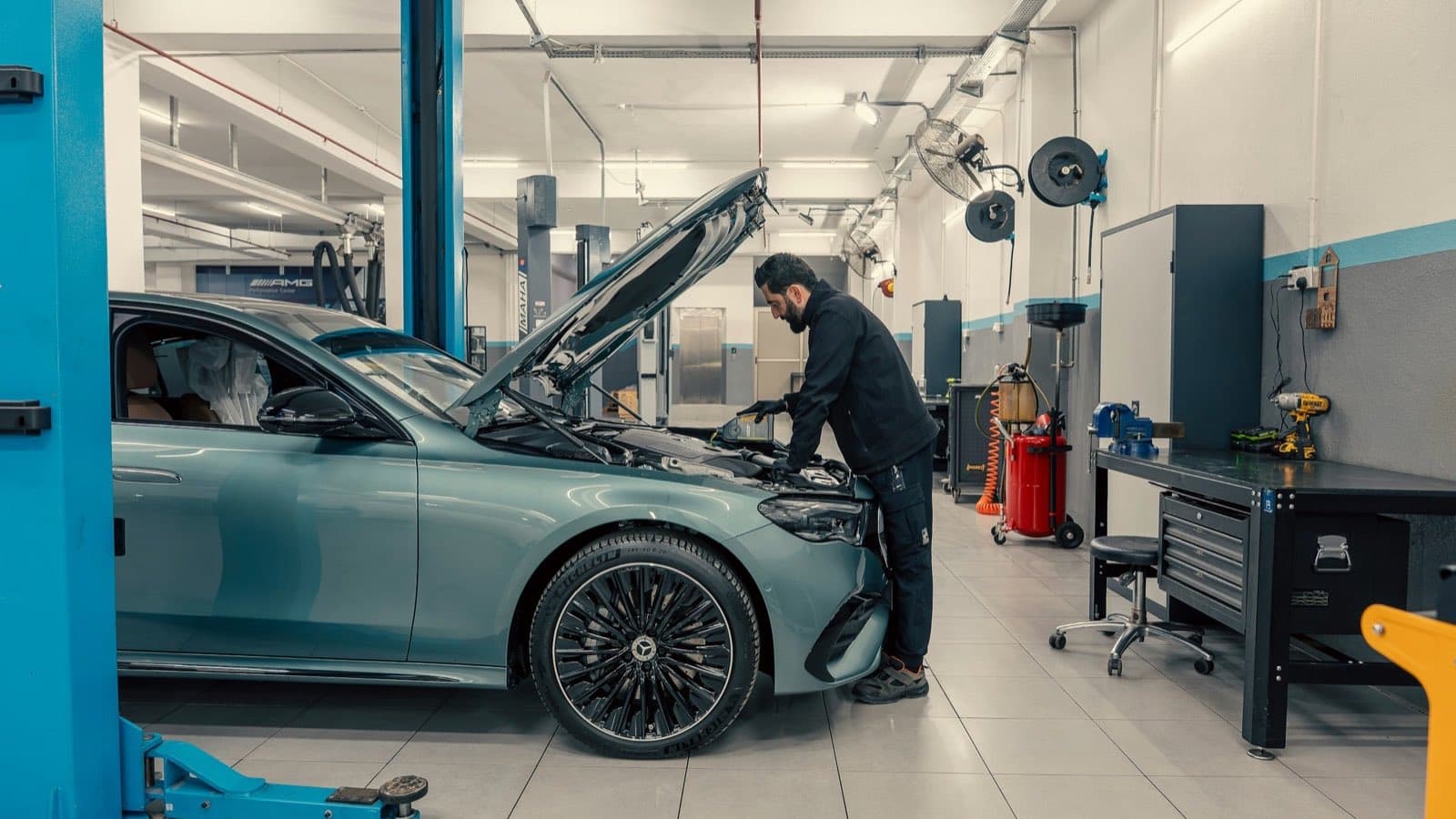
It's often the last question before taking the plunge: "And what if it breaks?" A car imported from Germany is not an orphan. It's protected on two levels — the manufacturer's warranty and the seller's legal guarantee — provided you know what triggers them, and what makes you lose them. Here's the clear picture, up to date for 2026.
Two guarantees not to confuse
In Germany as in France, there are two distinct things:
- The manufacturer warranty (Herstellergarantie): a commitment from the brand, attached to the car, valid across its whole European network.
- The seller's legal guarantee (Gewährleistung or Sachmängelhaftung): a legal obligation owed by whoever sells you the car, whether or not it's still under manufacturer warranty.
They add up. On a recent car, the first does most of the work; on a used car several years old, it's the second that counts.
The manufacturer warranty follows the car to France
This is the most reassuring point, and it's solid: EU competition rules for the car sector prohibit a brand's network from refusing the warranty on a vehicle bought in another EU country. The European Commission itself gives the example of a car bought in Germany and repaired close to home in France.
Three habits so that it applies without argument:
- Follow the manufacturer's service schedule, at the right intervals.
- Keep every proof: stamped service book or up-to-date digital service record, and all invoices.
- Check the start date: as a rule, the warranty runs from the first registration in Germany. A demonstrator or a "Tageszulassung" (registered for a day by the dealer) has therefore already used up part of its warranty.
You can have the car serviced outside the dealer network without losing the warranty, as long as you follow the manufacturer's specifications with original parts or parts of equivalent quality. Warranty repairs themselves are carried out at a brand dealer.
On an electric car, the battery warranty is often around 8 years or 160,000 km, with a guaranteed capacity threshold (often 70%): the exact terms vary by brand. See our guide to importing an electric car from Germany.
The German seller's legal guarantee
It all depends on who sells to you.
A professional (Händler)
- 2 years of legal guarantee in principle.
- On a used car, the seller can reduce it to a minimum of 1 year — but only if you were specifically informed before signing, and by an express and separate agreement. A line hidden in the general terms isn't enough.
- It cannot be excluded entirely.
- During the first year, it's up to the seller to prove the defect didn't exist at delivery.
- A known defect (repaired accident, disclosed wear) must also be specifically flagged and accepted in writing: the seller can't hide behind vague wording.
New for 2026: for contracts concluded since 31 July 2026, if you choose repair, the legal guarantee is extended once by 12 months, according to the ADAC (the German automobile club).
A private seller (Privatverkäufer)
They can sell "unter Ausschluss jeglicher Gewährleistung" — without any guarantee. That's valid, unless they deliberately concealed a defect or promised a specific quality (an agreed quality overrides the general exclusion). In practice, proof is hard to establish: with a private seller, the pre-purchase inspection is your real guarantee.
The "trade sale" trap
Some listings state "Export" or "Gewerbe": a sale reserved for professionals, without any guarantee. A private buyer who poses as a business to get the price loses their consumer protection. A bad bet.
If something breaks: the right order
- Report the defect to the seller, in writing, as soon as you notice it.
- Let them repair it: don't have it repaired elsewhere before notifying them, or you risk losing your rights.
- The seller can ask for the repair to take place at their premises; transport costs are then theirs to bear.
On a car still under manufacturer warranty, the simplest route is often to go straight to a brand dealer in France.
German law or French law?
By default, it's the seller's law that applies, so German law. But if the seller directs their business towards France (a French-language site, a French clientele on display…), a private buyer can rely on the more protective French rules: 2 years of legal guarantee of conformity, even on a used car. It's assessed case by case.
In a dispute, two concrete avenues:
- the European Consumer Centre France, in Kehl, free of charge, which works with its German counterpart;
- the European Small Claims Procedure, for amounts up to €5,000.
Commercial warranties and "Approved" programmes
Many sellers offer a Gebrauchtwagengarantie: a commercial warranty, often underwritten by a third party. It adds to the legal guarantee without replacing it, but it's narrower: a list of covered parts, caps, an excess. For an import, check above all the territory covered, which must appear in the contract.
The brands' used-car programmes (BMW Premium Selection, Mercedes Junge Sterne, Porsche Approved…) are often presented as European, but their terms differ. Example: BMW Premium Selection is valid across the European Economic Area and in Switzerland, but a repair abroad must be approved in advance by the warranty department. Simple rule: ask for the terms in writing, with the chassis number, before buying.
And in Switzerland?
Since 2024, a Swiss ordinance requires the manufacturer warranty to apply on the same terms as in Europe, and servicing outside the network cannot void it. For the rest of the process, see our guide to importing a car from Germany to Switzerland.
How Auto M Import secures your warranty
Before every purchase, we check the start date and remaining term of the manufacturer warranty, the service history (book and invoices) and the terms of any used-car programme or commercial warranty. We get in writing what the seller guarantees and any known defects, then hand you the full set of supporting documents so the warranty applies without argument in France.
In summary
- The manufacturer warranty follows the car: a French dealer must honour it, even for a car bought in Germany.
- It rests on two things: service schedule followed and proof kept.
- A professional seller owes 2 years of legal guarantee, at least 1 year on a used car, never zero.
- A private seller can exclude any guarantee: the pre-purchase inspection becomes your protection.
- If something breaks, notify the seller first and let them repair it.
Planning an import and have a warranty question? Write to us: we tell you what protects you, car by car. The analysis is free.
Frequently asked questions
- Is the manufacturer warranty of a car bought in Germany valid in France?
- Yes. EU competition rules for the car sector prohibit a brand's network from refusing the warranty on a vehicle bought in another EU country. In practice, a BMW, Mercedes or Porsche bought in Germany and still under warranty gets repaired at a brand dealer in France, on the same terms. The only practical condition: having followed the service schedule and kept the proof.
- Can you service an imported car outside the dealer network without losing the warranty?
- Yes, as long as the servicing follows the manufacturer's specifications, with original parts or parts of equivalent quality, and every job is documented (service book, invoices). The manufacturer can, however, refuse cover if the fault stems from poor workmanship. Repairs covered by the warranty itself are carried out within the brand's network.
- What guarantee does a German professional seller owe on a used car?
- A legal guarantee (Gewährleistung) of 2 years in principle. On a used car, the seller can reduce it to a minimum of 1 year, but only if you were specifically informed before signing and the reduction is agreed expressly and separately — not in a line of the general terms. It cannot be excluded entirely. And during the first year, it's up to the seller to prove the defect didn't exist at delivery.
- Can a private German seller sell without any guarantee?
- Yes. The wording 'unter Ausschluss jeglicher Gewährleistung' (without any guarantee) is valid between private individuals. It doesn't protect the seller if they deliberately concealed a defect, nor on a quality they expressly promised (for instance air conditioning advertised as working). That's why buying from a private seller calls for an even more thorough inspection.
- What should you do if a fault is covered by the German seller's legal guarantee?
- First report the defect to the seller, in writing, and let them repair it: don't have it repaired elsewhere first, or you risk losing your rights. The seller can ask for the repair to take place at their premises; transport costs are then theirs to bear. If things stall, the European Consumer Centre France (based in Kehl) helps settle disputes with a German seller free of charge.

Importer of premium vehicles from Europe to France and Switzerland. Specialist in sourcing, negotiation and administrative formalities.
Contact Maxime
Checking a German Car Before Buying: Odometer, History, Accidents (2026)
Wound-back odometer, false 'accident-free', incomplete service book: buying a car in Germany means knowing how to verify. The complete method, document by document, plus the essential German vocabulary so you don't get caught out.

Car Broker in Germany: How to Choose the Right One in 2026 (and Avoid Scams)
The complete guide to choosing a specialist German car broker or import agent: the 8 criteria that matter, the 6 questions to ask before signing, and the red flags to avoid.

mobile.de: How to Buy a Car in Germany Safely (2026 Guide)
mobile.de is the largest used-car marketplace in Europe — and the first place to look when importing from Germany. How to filter, read a listing, tell a dealer from a private seller, and above all spot the scams before you send a single euro.