

Buying a Car in Switzerland and Importing It into France: Customs, VAT and Paperwork (2026)
Switzerland is next door, but it isn't in the European Union: a car bought in Geneva or Lausanne pays French VAT, sometimes 10% customs duty, and has to go through customs clearance. What it really costs, the paperwork on both sides of the border, and when it's worth it compared with Germany.

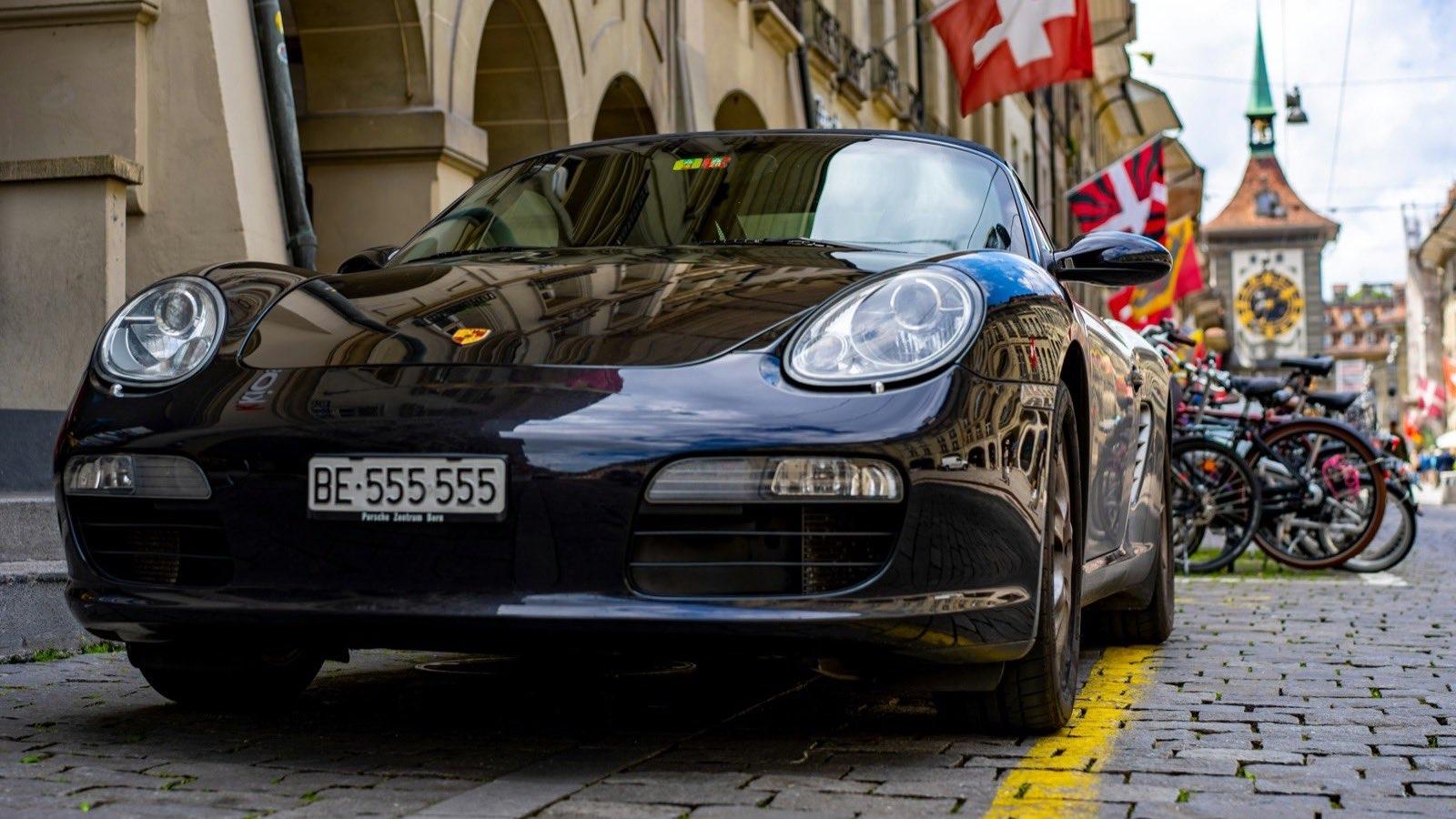
For someone living in Haute-Savoie, Ain or Doubs, a dealer in Geneva or Lausanne is sometimes closer than a French one. The temptation makes sense. But Switzerland isn't Germany: it's outside the European Union, and a car crossing the border has to be cleared through customs. Here's what it really costs, the paperwork on both sides, and the calculation that tells you whether it's worth it.
The short answer
- French VAT at 20%: always due, even on a used car, paid to customs.
- Customs duty at 10%: due, unless the car's European or Swiss origin is proven by a proof of origin.
- Swiss VAT at 8.1%: not due if a trade seller exports the car with proof of export. The 4% Swiss automobile tax, however, isn't refunded.
- For French registration: customs form 846 A replaces the quitus fiscal, and the Swiss roadworthiness test isn't accepted.
- The verdict: like for like, a used car in Switzerland must cost at least 17% less than in Germany to be worth it (24% without proof of origin). That's rarely the case.
Why Switzerland isn't Germany
Between France and Germany, there's no customs border: a used car bought in Germany arrives in France with no customs and no French VAT, with a simple quitus fiscal.
Switzerland, on the other hand, is outside the European Union and its customs union. A car bought in Switzerland by a French resident is therefore an import: it is declared to customs, taxed, then registered with a customs clearance certificate. Being next door doesn't change this rule.
What you pay in France
Import VAT: 20%. It's due in every case, on a new car as on a used one. It's calculated on the purchase price, plus customs duty and costs (transport, insurance) up to the place of destination.
Customs duty: 10%. That's the rate for passenger cars. It drops to zero if the car has European or Swiss preferential origin, proven by a proof of origin (see below).
Penalty tax and registration: exactly as for a German car. The penalty tax follows the scale of the year of first registration, even in Switzerland, with a reduction based on age: see our penalty tax guide.
Example for a car bought for €50,000 excluding Swiss VAT, compared with the same car bought for €50,000 in Germany:
| Germany | Switzerland, origin proven | Switzerland, origin not proven | |
|---|---|---|---|
| Purchase price | €50,000 | €50,000 | €50,000 |
| Customs duty (10%) | €0 | €0 | €5,000 |
| French VAT (20%) | €0 | €10,000 | €11,000 |
| Total before penalty tax, registration and transport | €50,000 | €60,000 | €66,000 |
VAT is also charged on the duty: 20% of €55,000, or €11,000. Strictly speaking, transport costs up to the border are added to the calculation base.
Proof of origin: €5,000 at stake on a €50,000 car
A car's origin is where it was built, not its brand. Thanks to the free trade agreement between the European Union and Switzerland, a car built in the EU or in Switzerland, which meets the agreement's rules of origin, can enter France free of customs duty, provided this is proven by a proof of origin. A car built elsewhere, for example in the United States or China, pays the 10% whatever its brand.
To find out where it was built, look at the first character of the chassis number (VIN): W for Germany, 5 for the United States, L for China. The certificate of conformity also shows the manufacturer and the assembly plant.
The document you need. Above CHF 10,300, which covers any premium car, you need:
- an EUR.1 certificate, endorsed by the Swiss customs export office;
- or an origin declaration on the invoice, made out by a seller with approved exporter status.
The condition on the seller's side. According to Swiss customs (FOCBS), the seller can only issue this proof if they hold one of these documents:
- a confirmation from the brand's Swiss importer that the car meets the rules of origin;
- a copy of the car's customs clearance decision on arrival in Switzerland, showing preferential origin;
- a copy of the proof of origin from its import into Switzerland.
For a car imported or registered in Switzerland more than 10 years ago, a manufacturer's declaration is enough.
A brand dealer generally obtains these documents. With a private seller, it's far less certain: check before buying that the proof of origin can be issued. Otherwise, count on the 10%.
On the Swiss side: VAT, automobile tax and export declaration
- Swiss VAT at 8.1% isn't due when a trade seller exports the car and holds proof of export (the Swiss customs export decision). A private individual doesn't charge VAT.
- The 4% Swiss automobile tax, paid when the car arrived in Switzerland, is built into Swiss prices. It isn't refunded when a used car is sold on to a foreign buyer.
- The export declaration is mandatory. It's made at a Swiss customs office that handles commercial goods, with the Swiss registration document (even if cancelled), ID, the declaration itself and the proof of origin. Since late February 2026, the Passar system has replaced e-dec for export declarations. A freight forwarder can handle it.
Watch the exchange rate. On 25 November 2026, €1 was worth CHF 0.9085 (ECB reference rate). A price in francs is therefore about 10% higher once converted into euros. Example: a listing at CHF 100,000, Swiss VAT included, comes to about €101,800 excluding Swiss VAT, before French VAT.
Driving to France: export plates or truck
In Switzerland, plates belong to the registration holder, not to the car: the seller keeps them. Two solutions:
- Swiss export plates, issued by the canton's road traffic office, with insurance. Rules vary from canton to canton:
- Geneva: you must live in Geneva or the car must be parked there. The plates are valid until the end of the month, with no extension. Allow CHF 85 for the plates and permit, and CHF 190 for third-party insurance (CHF 95 from the 16th of the month).
- Vaud: 35 days maximum, with collective insurance and a green card.
- Zurich: 35 days maximum, insurance included, for private individuals.
- Truck transport, the simplest solution if the car is far from the border.
The foreign plates must be valid at the time of French customs clearance: a car driven to the customs office must therefore carry export plates that haven't expired.
French customs clearance and form 846 A
- Present the car at a French customs office, with the Swiss registration document, the invoice (or a signed sale certificate for a private purchase) and the proof of origin.
- Pay the VAT and any duty. A private individual doesn't need an EORI number.
- Receive form 846 A, which proves the taxes have been paid.
French customs offers an online procedure, "Certificat de dédouanement n° 846 A", on demarche.numerique.gouv.fr: the stated processing time ranges from a few minutes for a complete file to around ten days. Payment, however, is always made at a customs office. Before you go, call Infos Douane Service (0 800 94 40 40, free from France) to find out which office handles cars and whether you need an appointment.
French registration
The procedure is the same as for a German car, on France Titres: "Immatriculation d'un véhicule d'occasion acquis à l'étranger" (registration of a used vehicle acquired abroad). Three differences:
- form 846 A replaces the quitus fiscal;
- the Swiss roadworthiness test isn't accepted: France only accepts a test carried out in France or in an EU country. For a car over 4 years old, you need a roadworthiness test in France, less than 6 months old;
- the Swiss registration document doesn't replace the European certificate of conformity (COC): ask the seller or the manufacturer for it.
Everything else is identical: documents, price and timelines are in our registration guide.
Switzerland or Germany: the deciding calculation
A used car bought in Germany pays neither customs nor French VAT. The same car bought in Switzerland pays at least 20% VAT. For the deal to be worth it, the Swiss price (excluding Swiss VAT) must therefore be:
- at least 17% cheaper than in Germany if origin is proven;
- at least 24% cheaper if it isn't;
- before export plates, transport, the French roadworthiness test and the time spent at customs.
On top of that, Swiss prices include the 4% automobile tax, which isn't refunded. No reliable study compares used-car prices between Switzerland, Germany and France: you have to compare the same car on both markets. In the vast majority of cases, the required gap doesn't exist.
When Switzerland can make sense:
- a rare car, impossible to find elsewhere, whose price justifies the taxes;
- a move from Switzerland to France: your own car can then enter free of duty and VAT, under conditions. It's all explained in our article for cross-border workers.
Pitfalls to avoid
- Comparing a Swiss price including VAT with a German price without removing Swiss VAT or adding French VAT.
- Buying without checking the proof of origin: 10% extra duty, with VAT calculated on that amount too.
- Forgetting the exchange rate: one Swiss franc is worth about €1.10.
- Relying on the Swiss inspection for French registration: you'll need a French roadworthiness test.
- Keeping the Swiss plates instead of clearing the car through customs: for a French resident, driving in France on Swiss plates is prohibited, with narrow exceptions, and customs can claim duty and VAT.
How Auto M Import helps
We work on both sides of the border. Spotted a car in Switzerland? We work out its real cost in France, VAT, any duty and penalty tax included, and we look for the same car in Germany to compare. If Germany works out better, we source it, import it and register it in your name. Every step is in our guide to importing a car from Germany.
In summary
- Switzerland is outside the European Union: a car bought in Switzerland is cleared through customs in France.
- French VAT at 20% always due, plus 10% duty unless European or Swiss origin is proven by an EUR.1 or an approved exporter.
- Swiss VAT at 8.1% not due on export, but the 4% automobile tax isn't refunded.
- Form 846 A replaces the quitus fiscal; the Swiss roadworthiness test isn't accepted.
- To beat Germany, the Swiss price must be at least 17 to 24% lower: that's rarely the case.
Got a Swiss listing in mind? Write to us: we'll do the full calculation and tell you whether it's worth it. The analysis is free.
Frequently asked questions
- Do you pay French VAT on a car bought in Switzerland?
- Yes, always, even on a used car. Switzerland isn't in the European Union: the car is imported, and 20% VAT is paid to customs, on the purchase price plus customs duty and costs up to the place of destination. In return, Swiss VAT at 8.1% isn't due when a trade seller exports the car with proof of export.
- Do you pay customs duty on a car bought in Switzerland?
- Yes, 10% of the price, unless the car has European or Swiss preferential origin proven by a proof of origin: an EUR.1 certificate endorsed by Swiss customs, or an origin declaration made out by an approved exporter. Origin depends on where the car was built, not on the brand: a German car built in the United States pays the 10%.
- What is form 846 A?
- It's the customs clearance certificate issued by French customs once VAT and duty have been paid. For a car coming from a non-EU country such as Switzerland, it replaces the quitus fiscal in the French registration file. It can be requested through an online procedure, but payment is made at a customs office.
- Is the Swiss roadworthiness test accepted for French registration?
- No. France accepts a roadworthiness test carried out in France or in another EU country. Switzerland isn't one of them: for a car over 4 years old, a test in France is needed, less than 6 months old when you apply for registration.
- How do you bring a car bought in Switzerland back to France?
- Swiss plates belong to the registration holder and stay with the seller. Two solutions: Swiss export plates, issued by the canton with insurance (until the end of the month in Geneva, 35 days maximum in the cantons of Vaud or Zurich), or truck transport. Either way, an export declaration must be made to Swiss customs.
- Is it better to buy a car in Switzerland or in Germany?
- For a French resident, Germany is almost always better: a used car bought in Germany pays neither customs nor French VAT. To be worth it, the same car bought in Switzerland must cost at least 17% less excluding Swiss VAT, and 24% less if origin isn't proven, before transport and customs costs.

Importer of premium vehicles from Europe to France and Switzerland. Specialist in sourcing, negotiation and administrative formalities.
Contact Maxime
Cross-Border Worker: Register Your Car in France or Switzerland? (2026 Rules)
You live in France and work in Geneva, Lausanne or Basel: where to register your car, can you drive on Swiss plates, what a Swiss company car allows, and should you buy in Switzerland or Germany? The exact rules, and the mistakes that cost 30% of the car's value.
Importing a Car from Germany to France in 2026: The Complete Guide (Price, Process, Timeline)
Everything you need to know before bringing a vehicle in from Germany: the real costs, the administrative process, realistic timelines, and the pitfalls to avoid.
2026 Penalty Tax on a Car Imported from Germany: What Actually Applies
CO2 penalty tax, weight tax, the so-called 'retroactive penalty tax': separating fact from fiction for 2026. How the penalty tax is really calculated on an imported used car — and the two misconceptions that cost buyers dearly.